It seems like everyday a new report rings the alarm on another mercury filled fish we should banish from our diets. As health conscious consumers walking into a fresh fish market or scrolling through a restaurant menu can be daunting at best. What fish can I eat? As a woman of child bearing age should I order the salmon, the mahi mahi, or forgo fish all together in fear of damaging myself and a child I might have years down the road?! Beyond future pregnancies, how is my choice effecting the environment, and what other chemicals am I ingesting? The considerations are literally endless!! What can we actually eat?
Instead of trying to keep up with the constant flow of press releases log on to websites of organizations that do that for you. The Environmental Defense Fund has an incredible website describing all the eco and health conscious fish options. The organization places each fish into eco-best, okay, and worst categories based on the most current research.
The EDF also offers a printable pocket guide you can carry in your wallet so you can weigh your options when out and about. Most recently they unveiled a Seafood Selector To-Go that you can access easily from your cell phone. The selector provides you with mobile access to recommendations for more than 200 popular seafood choices. Here’s a simple run down of the best and worst fish to eat:
Eco-Best: Choices describe wild fish caught from healthy, well-managed populations using low-impact fishing gear; or farmed fish raised in systems that control pollution, chemical use and escapes.
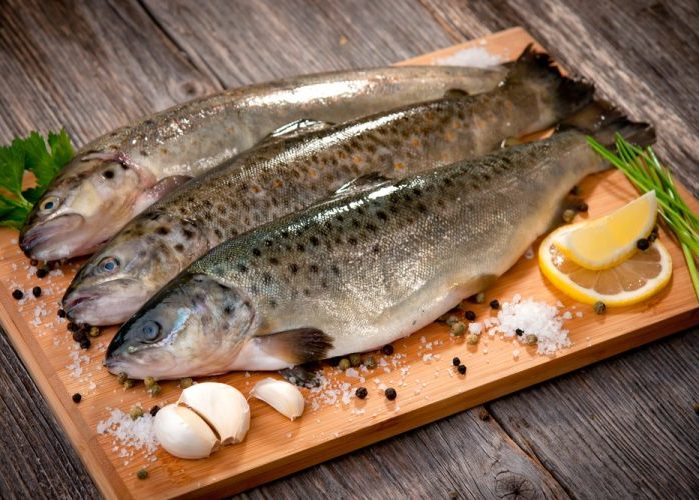
Examples: Anchovies, Char (Arctic, farmed), Atlantic Mackerel, Mussels, Oysters (farmed), Wild Salmon (Alaska), Rainbow Trout (farmed), Albacore Tuna (U.S/Canada)
Eco-Worst: Choices have a number of associated environmental problems, such as overfished populations, poor (or no) management, high bycatch or habitat impacts, or farms that allow widespread pollution, chemical use and escapes.
Examples: Chilean Sea bass, Grouper, Salmon (Atlantic, farmed), Shark, Swordfish (imported), Yellowfin Tuna (imported), Blue fin Tuna.
Fish are an excellent source of protein and are full of essential Omega-3 fatty acids. While you can find the vital omega-3’s in flaxseed, avocado and other whole foods, fish offer a fabulous way to incorporate healthier meat into your diet; Devoid of saturated fats, antibiotics and hormones found in red meat. Like anything you just have to know what you’re eating (and today, know what you consume has been eating or swimming in!). Now you’ve got a leg up on the options!